
reviews
By Harald Wittig
The lucky clover
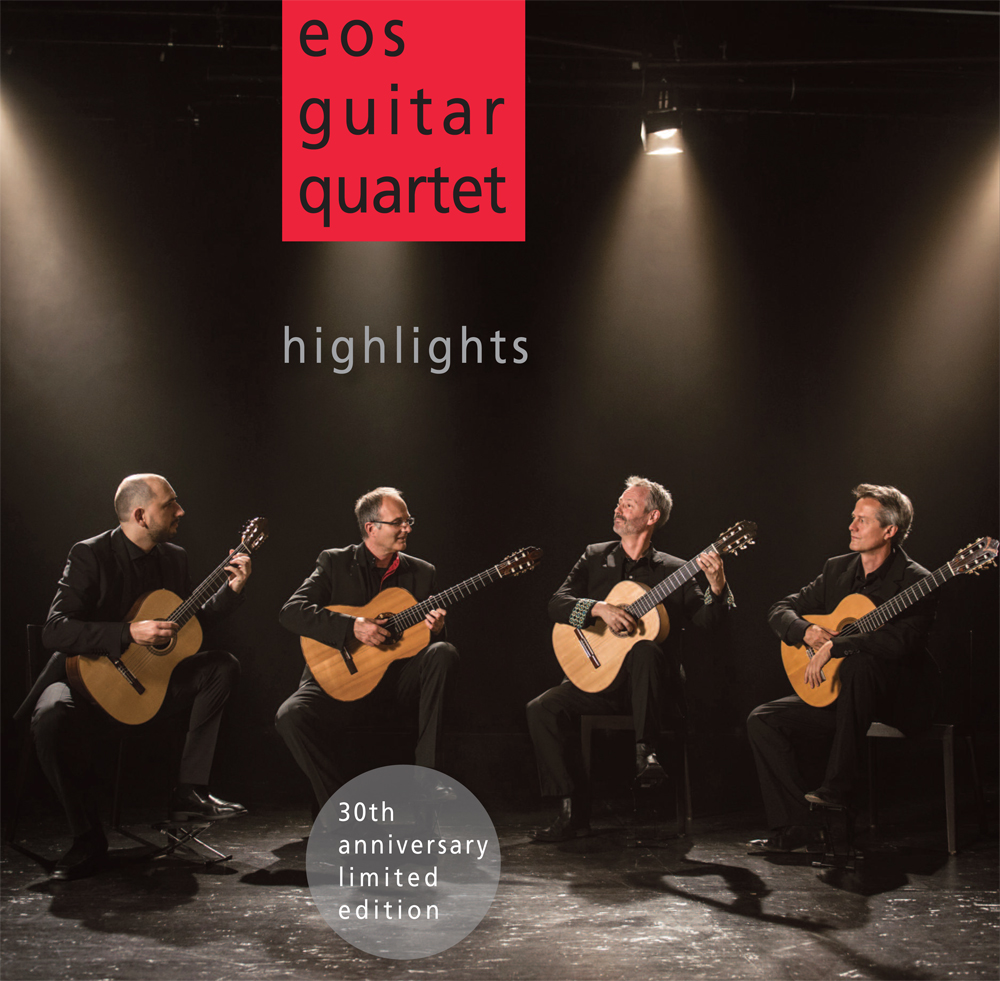
Eos Guitar Quartet - The Swiss guitar quartet is one of the best ensembles of its kind. For its 30th anniversary, this lucky clover has realized a very special project.
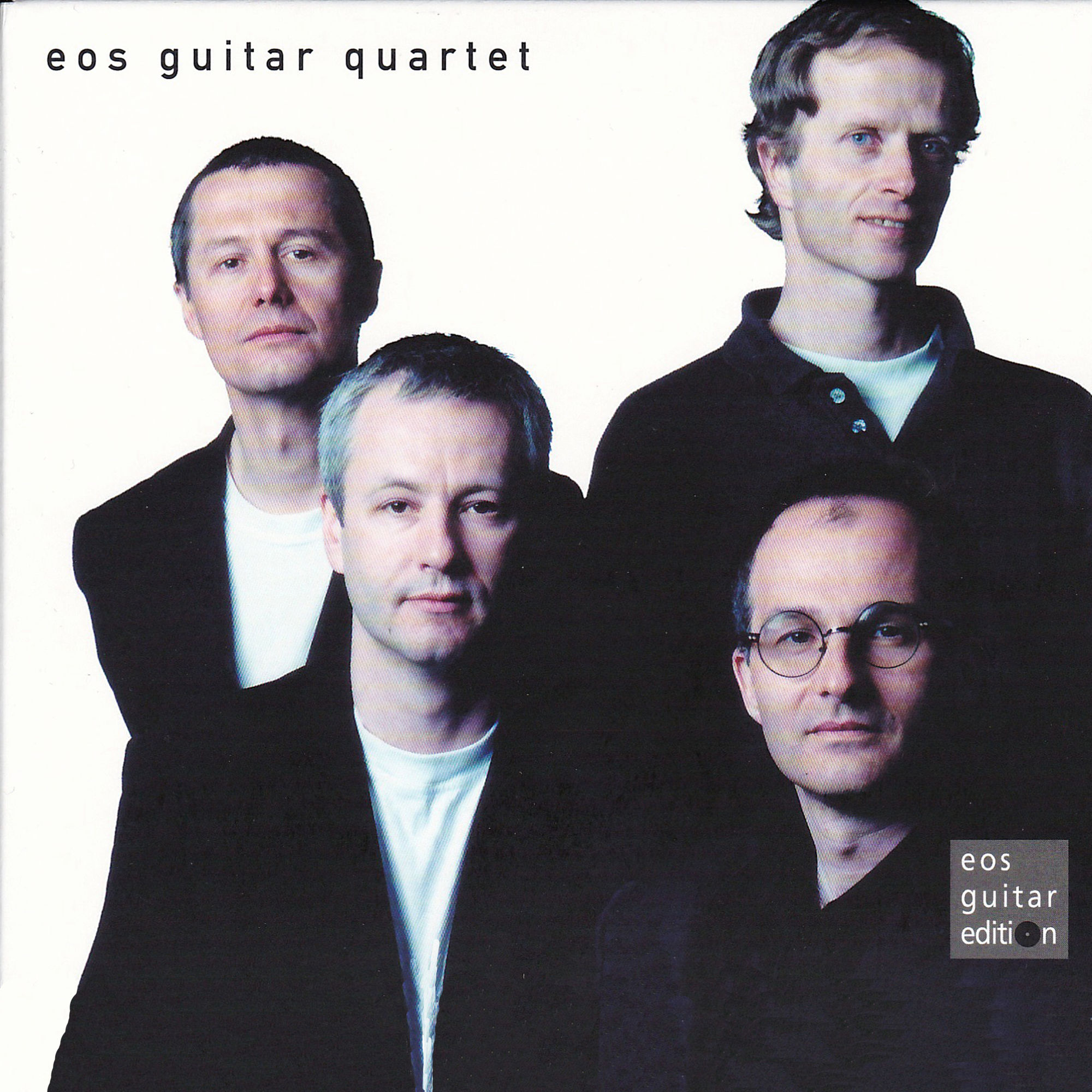
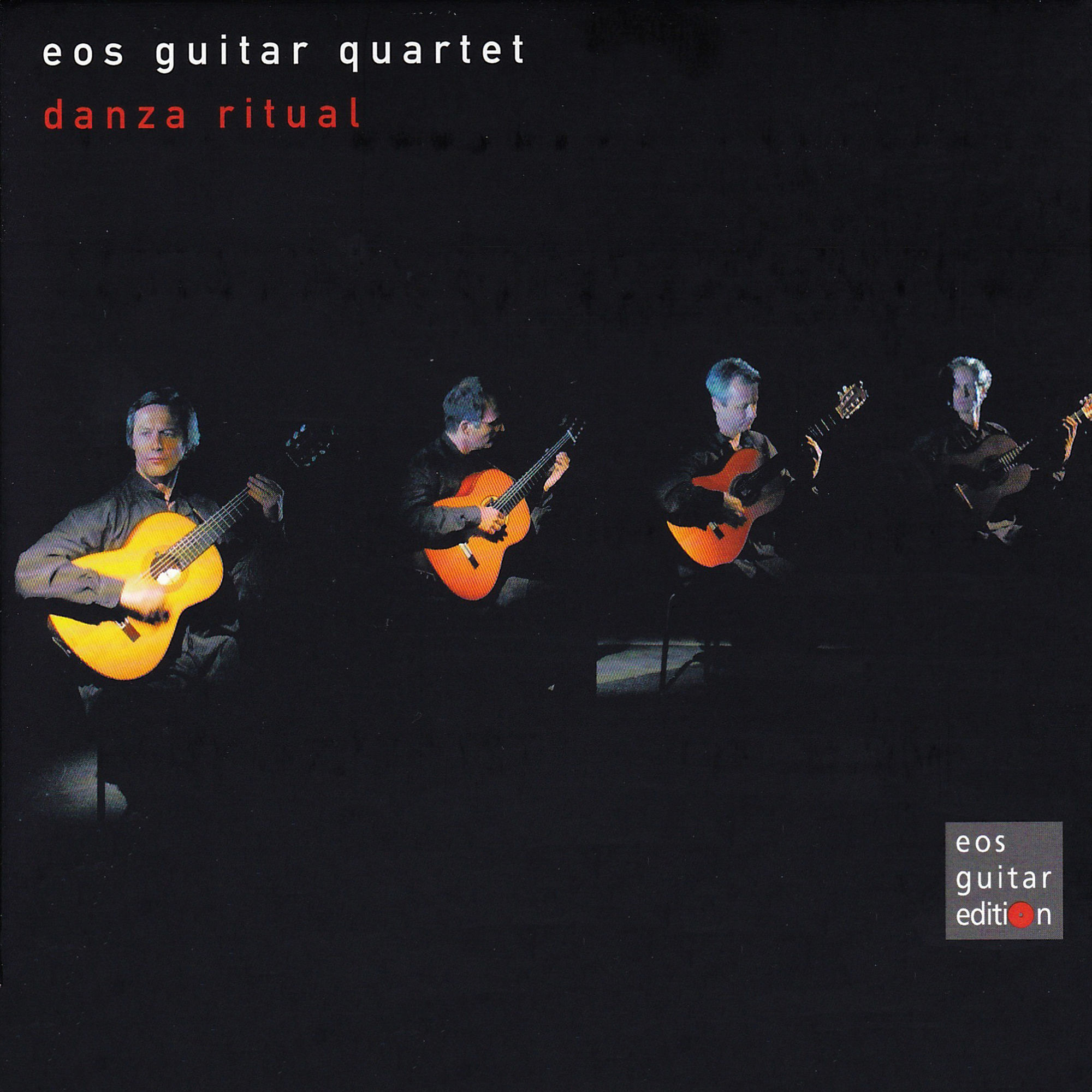
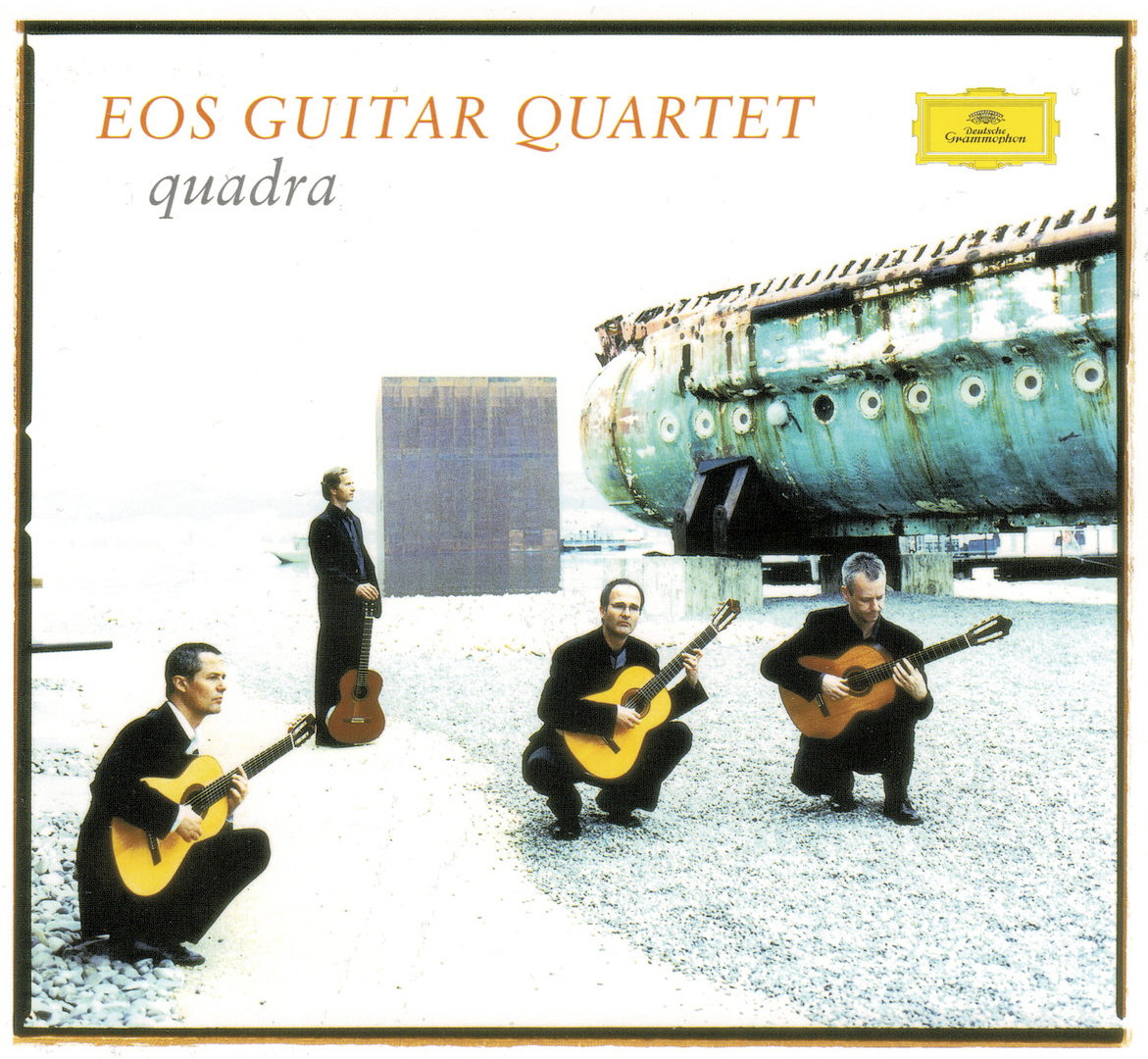
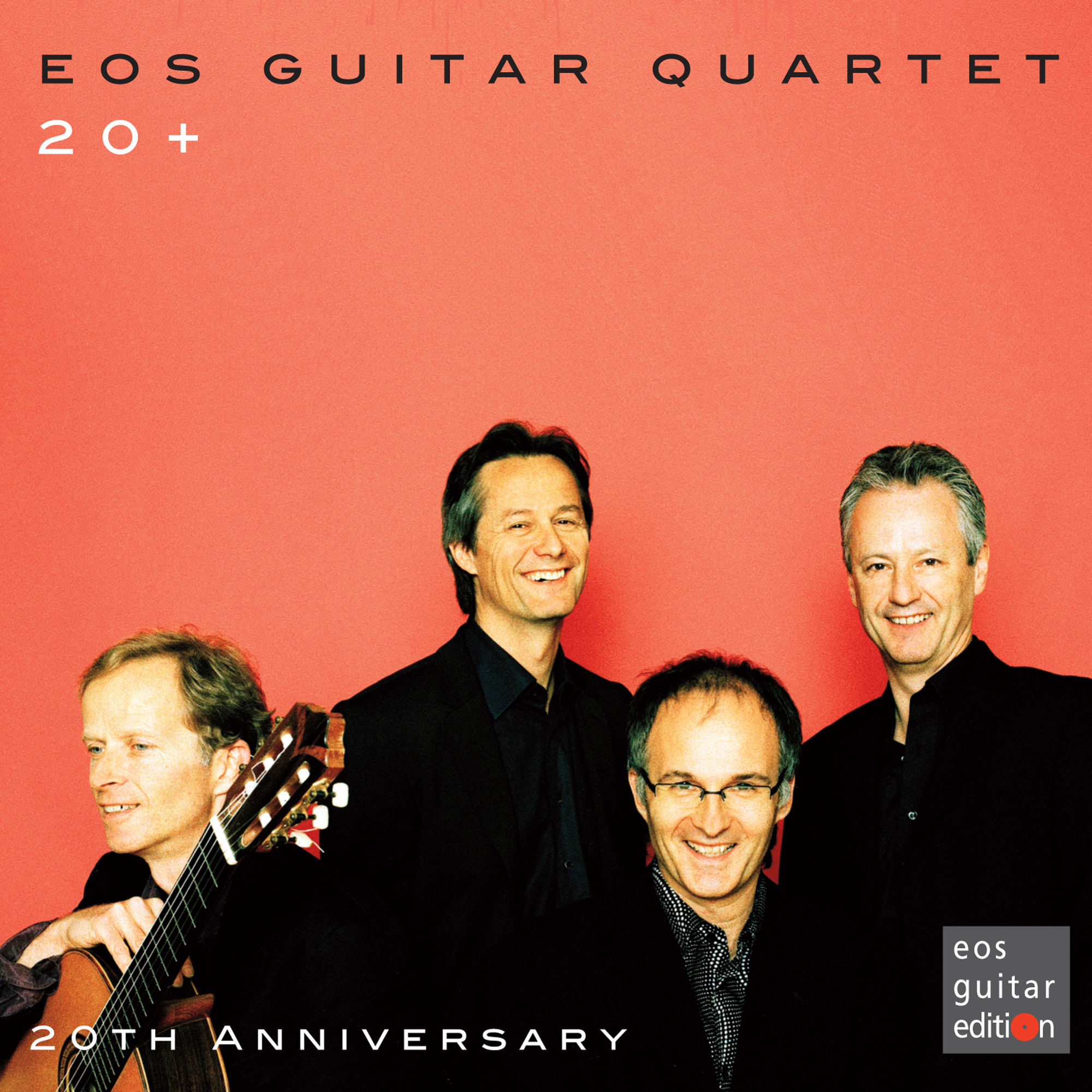
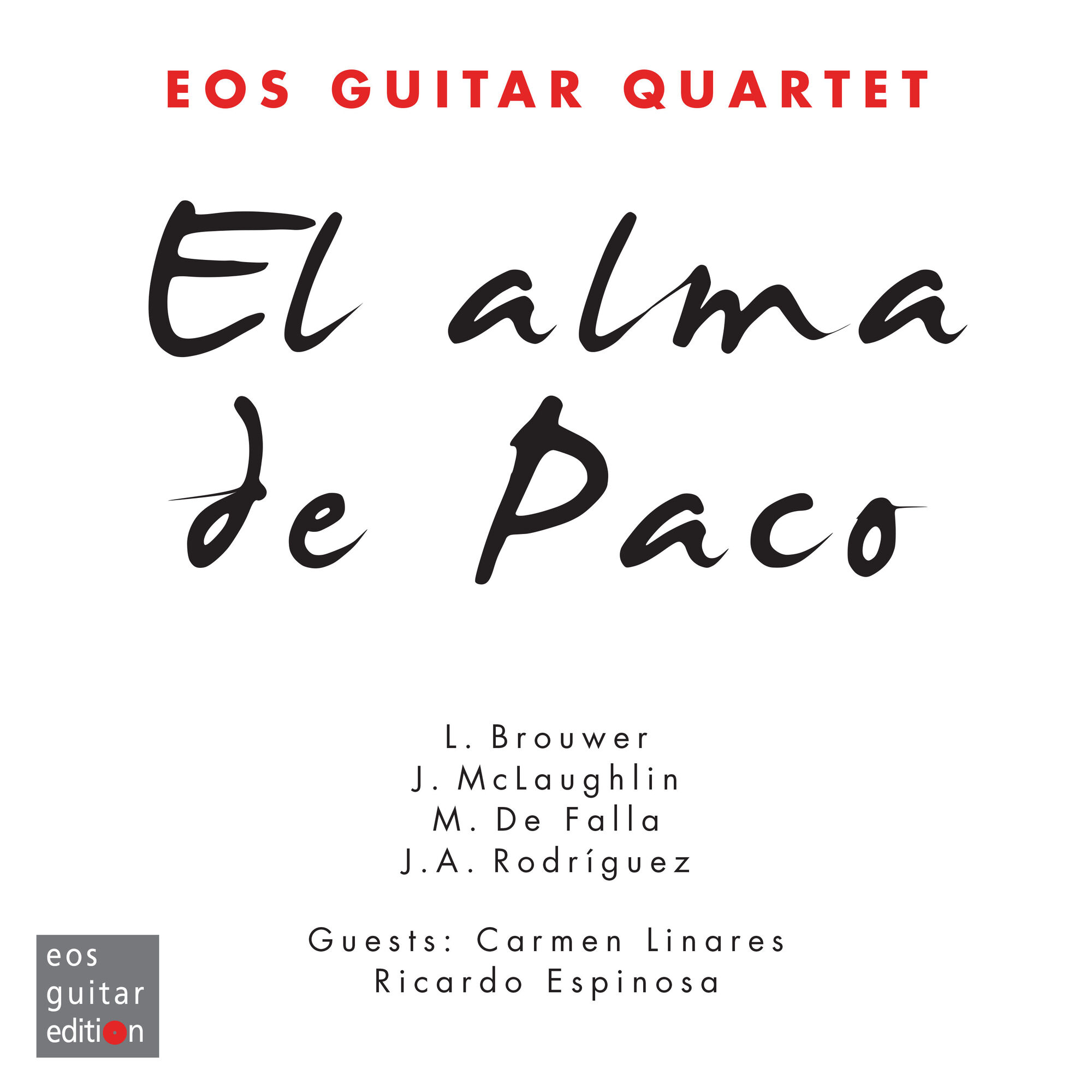
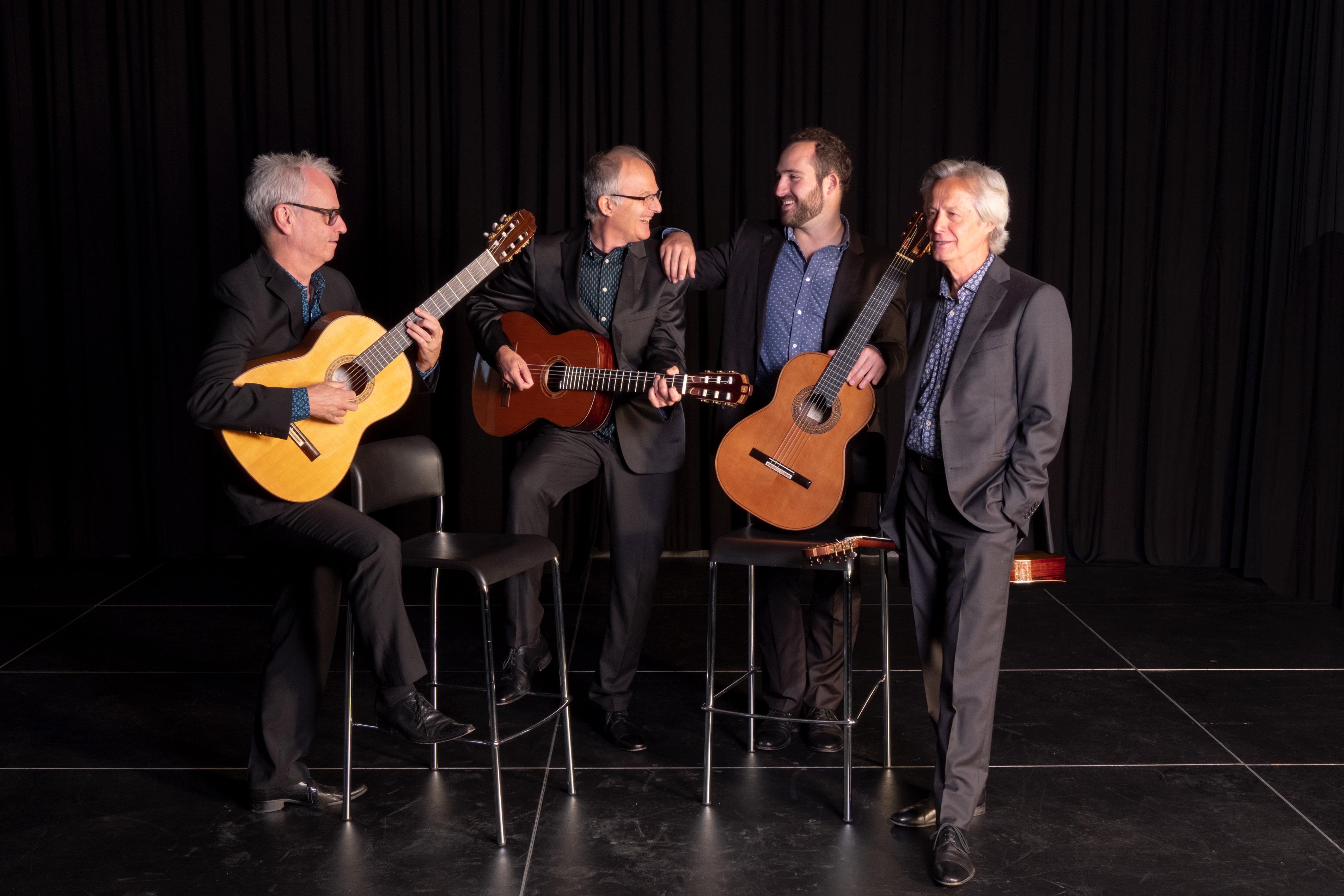
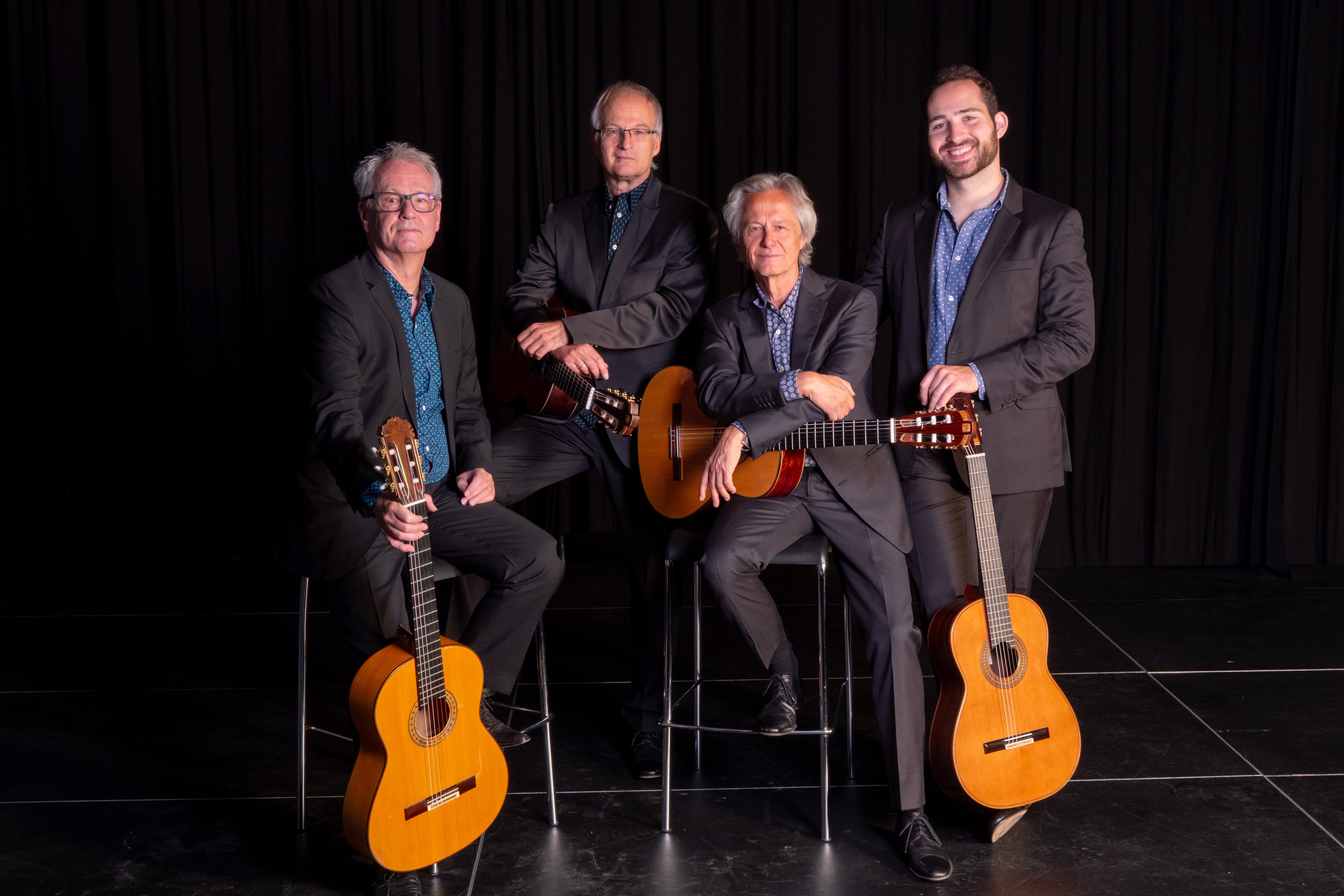
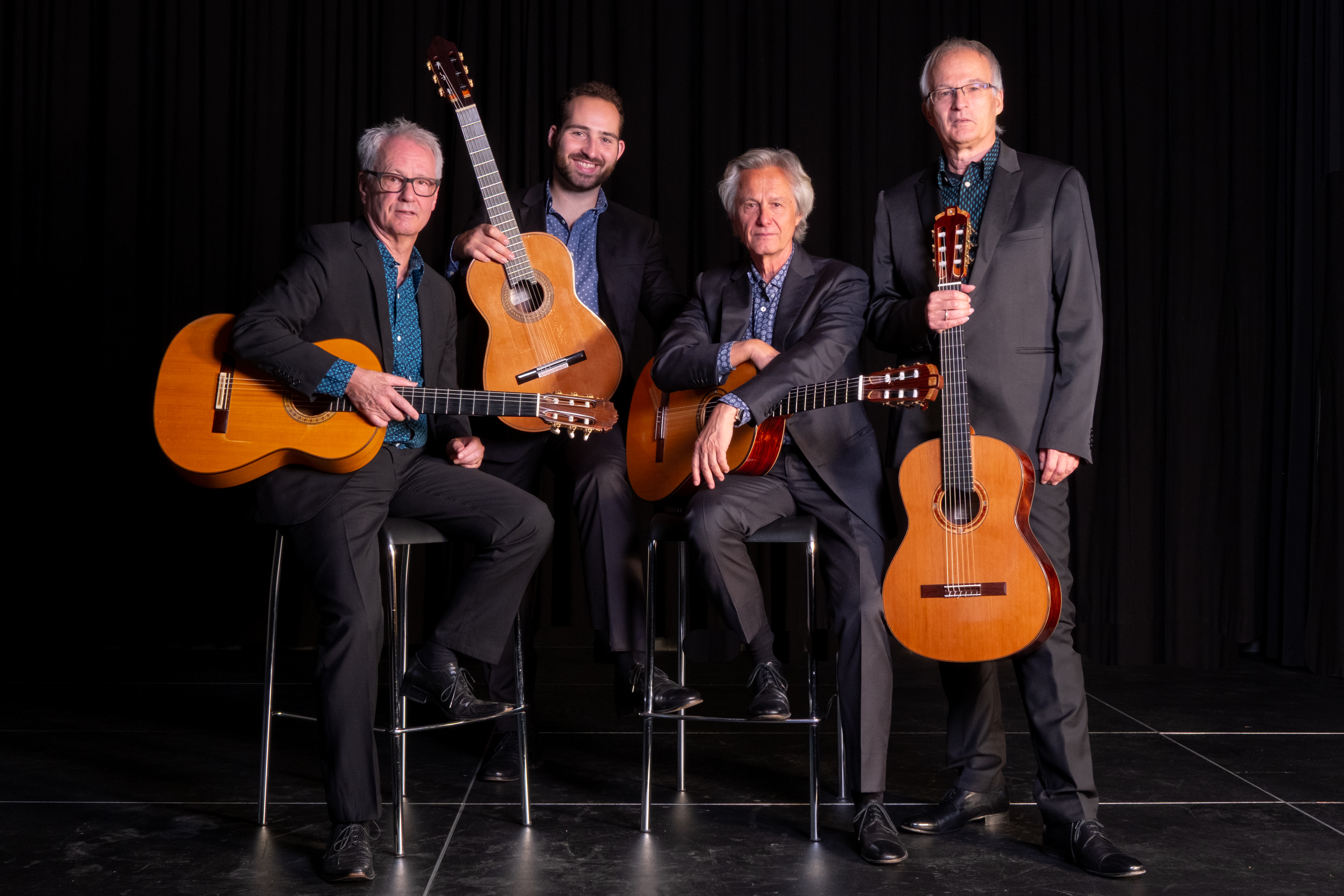
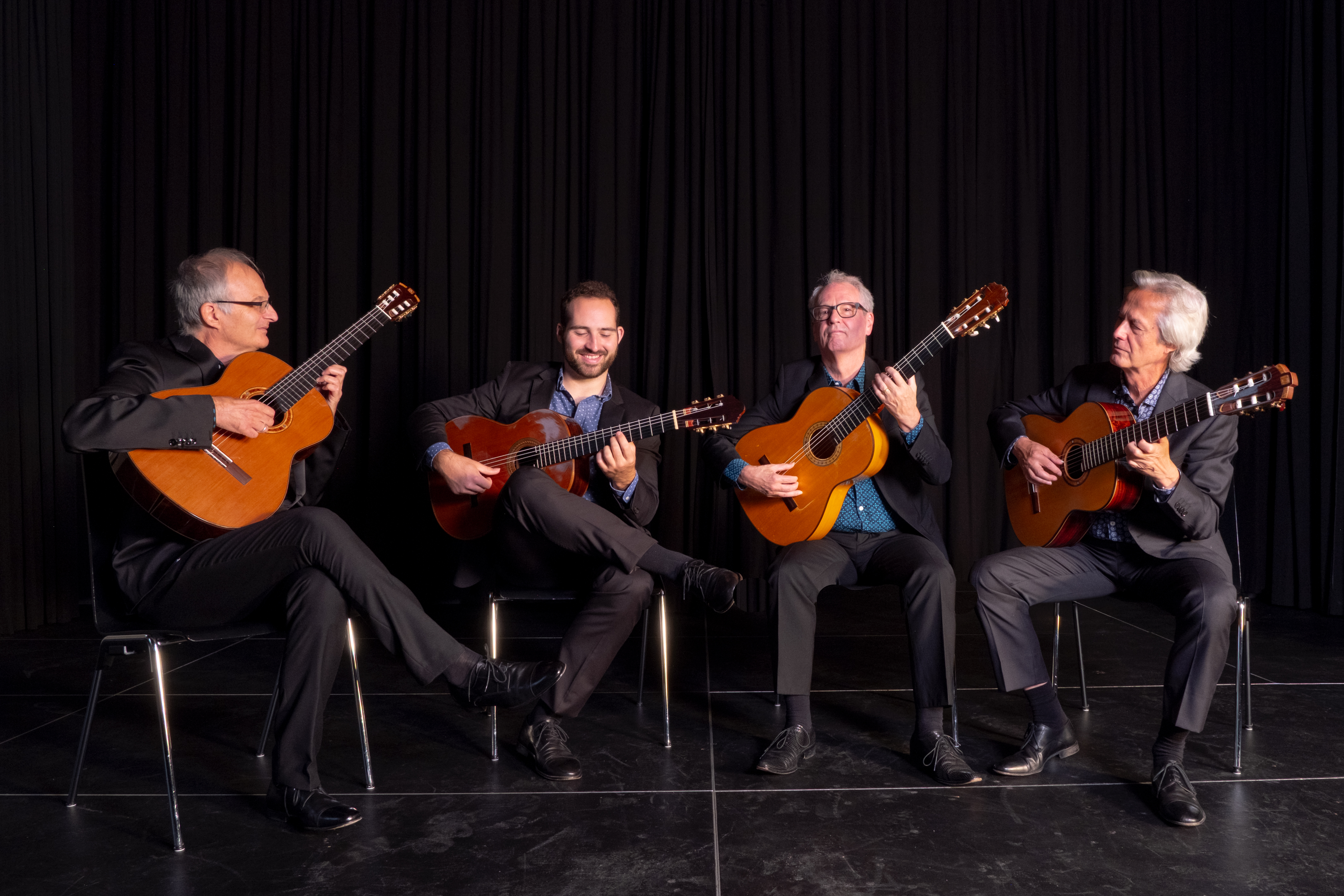
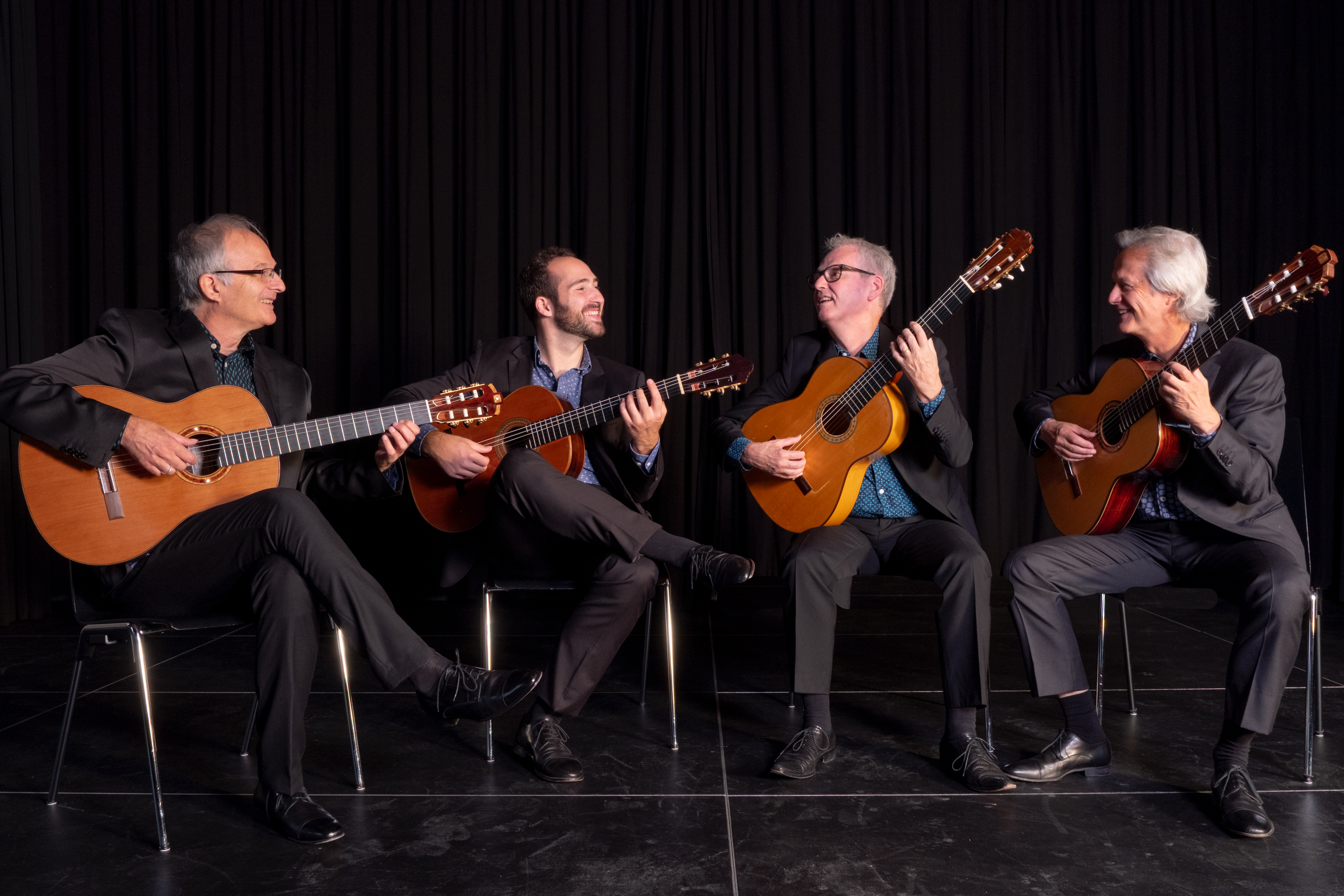
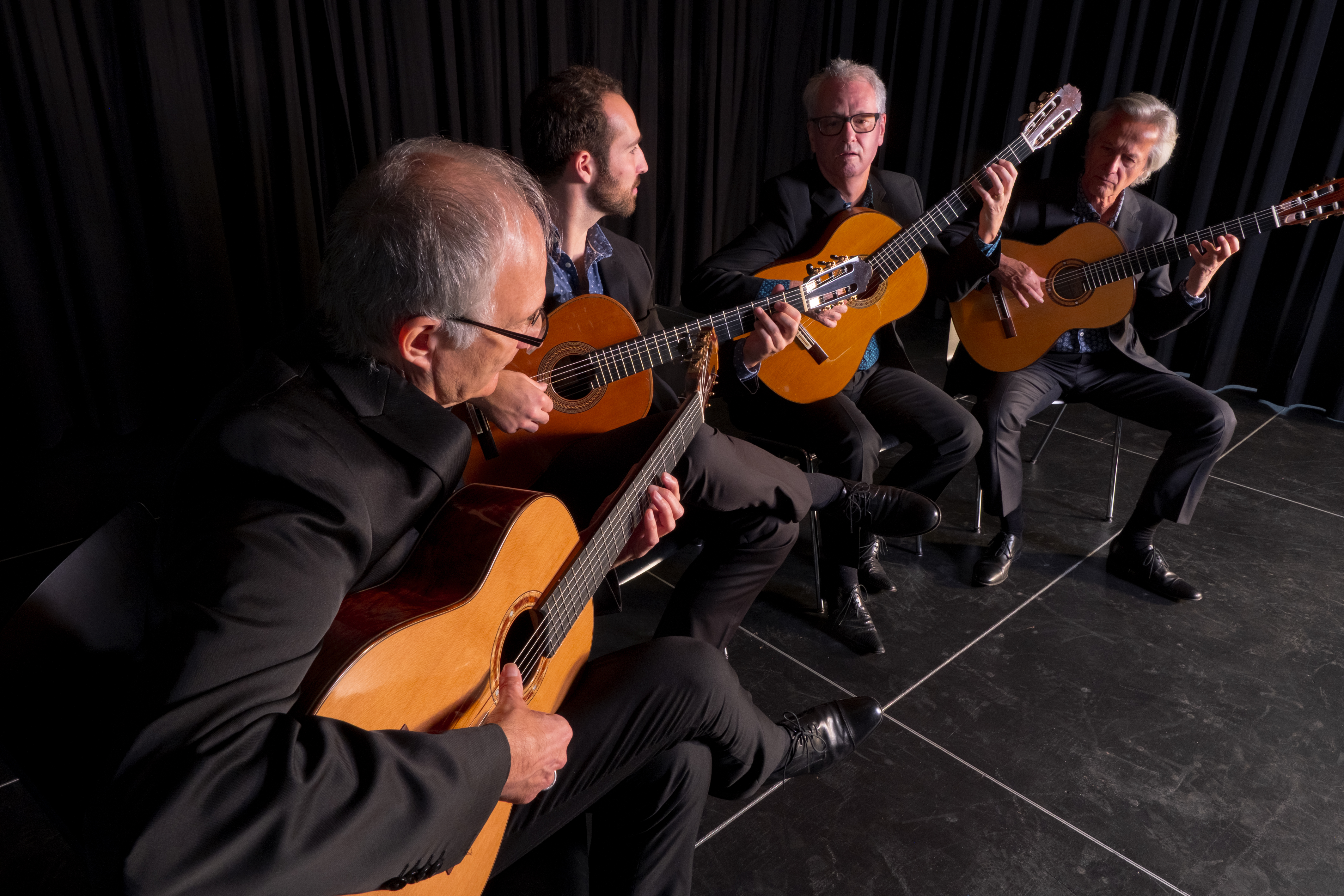
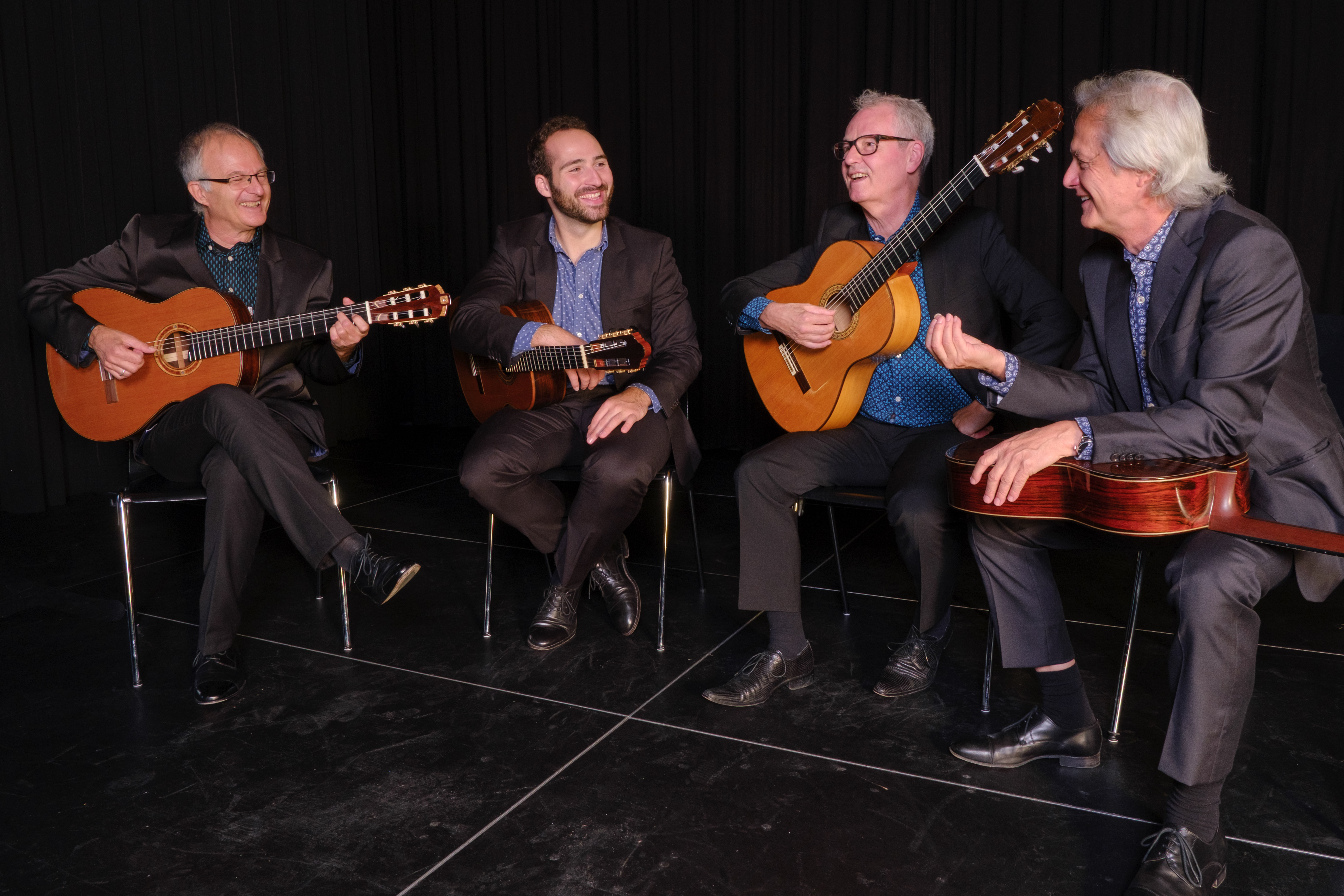
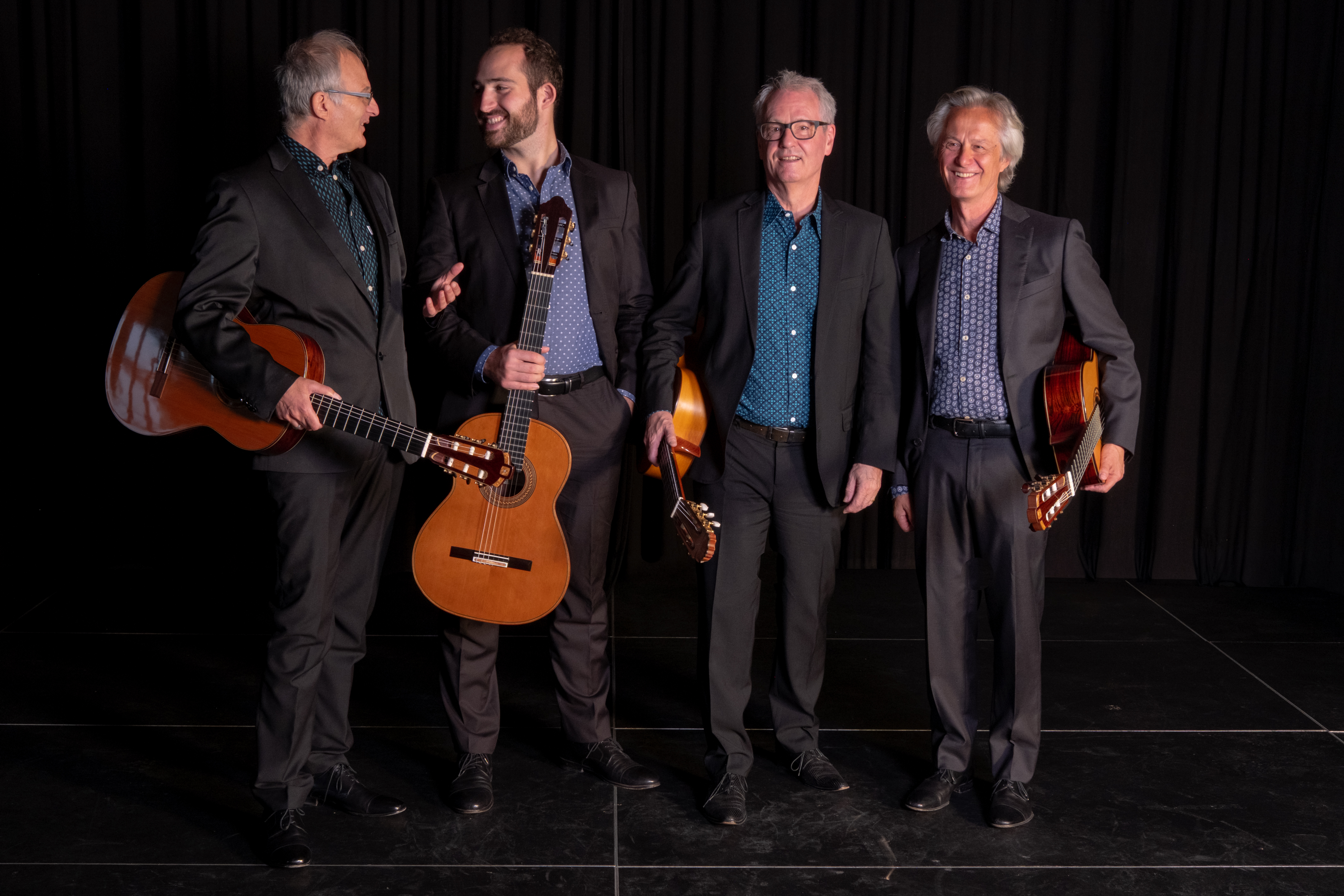
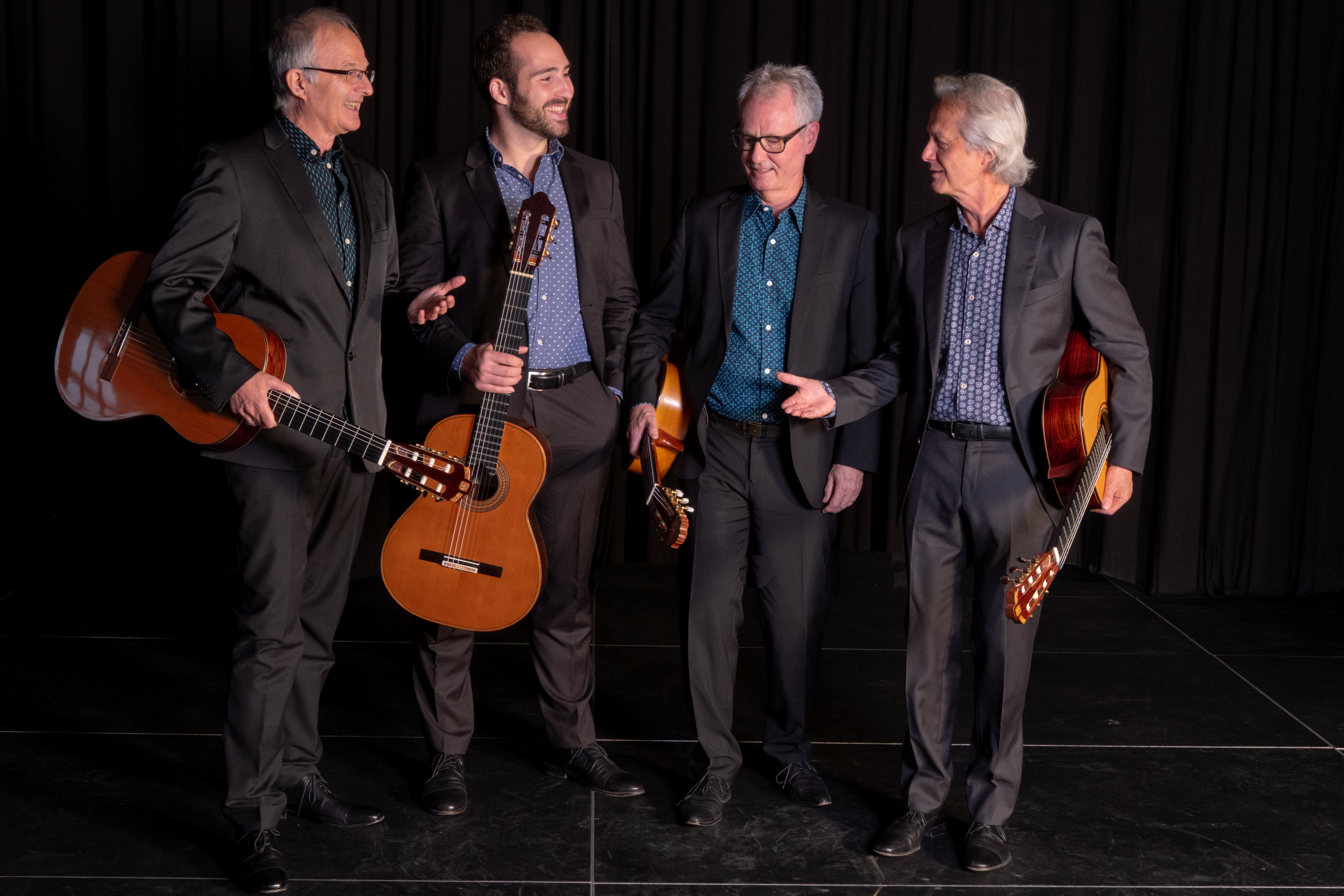
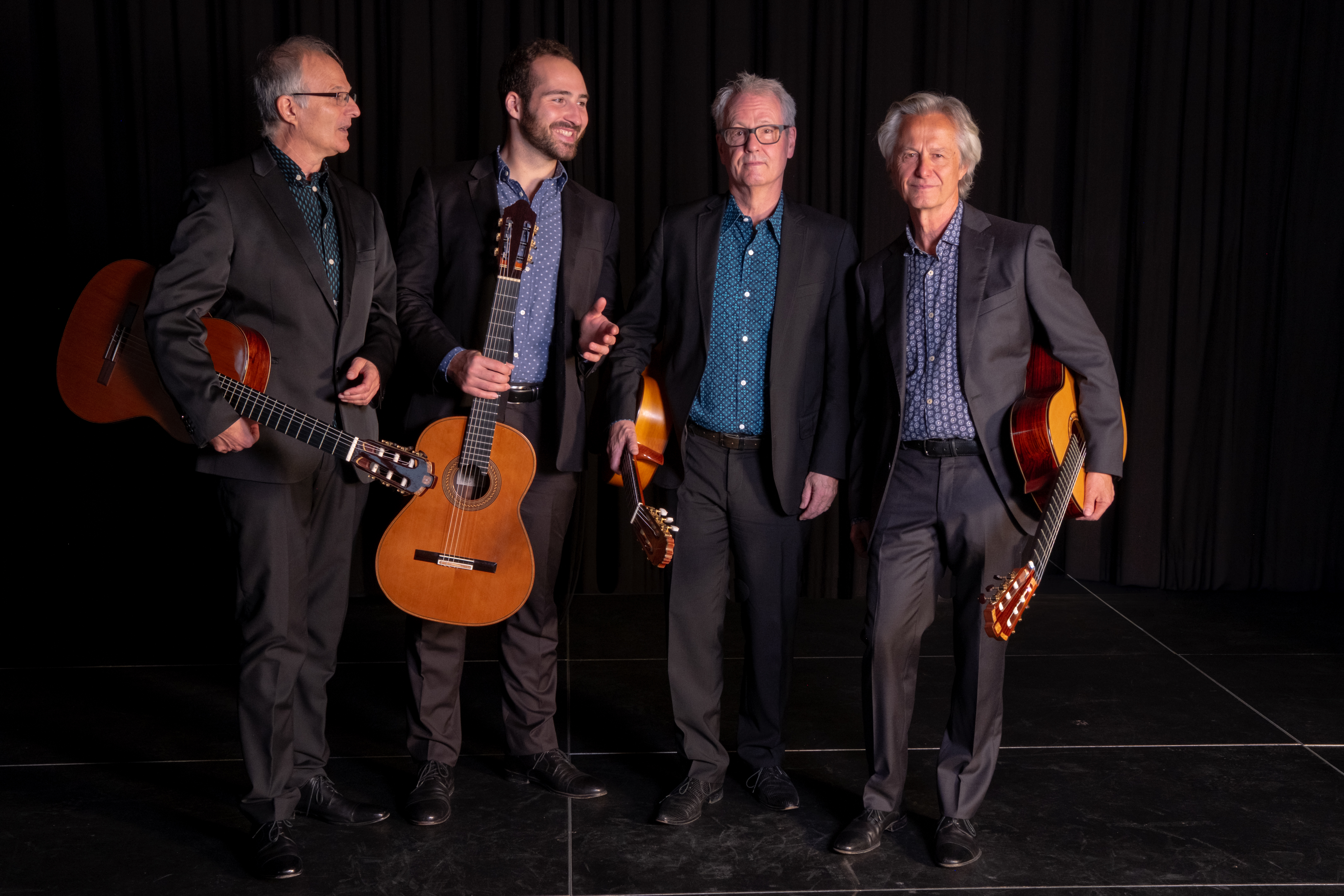
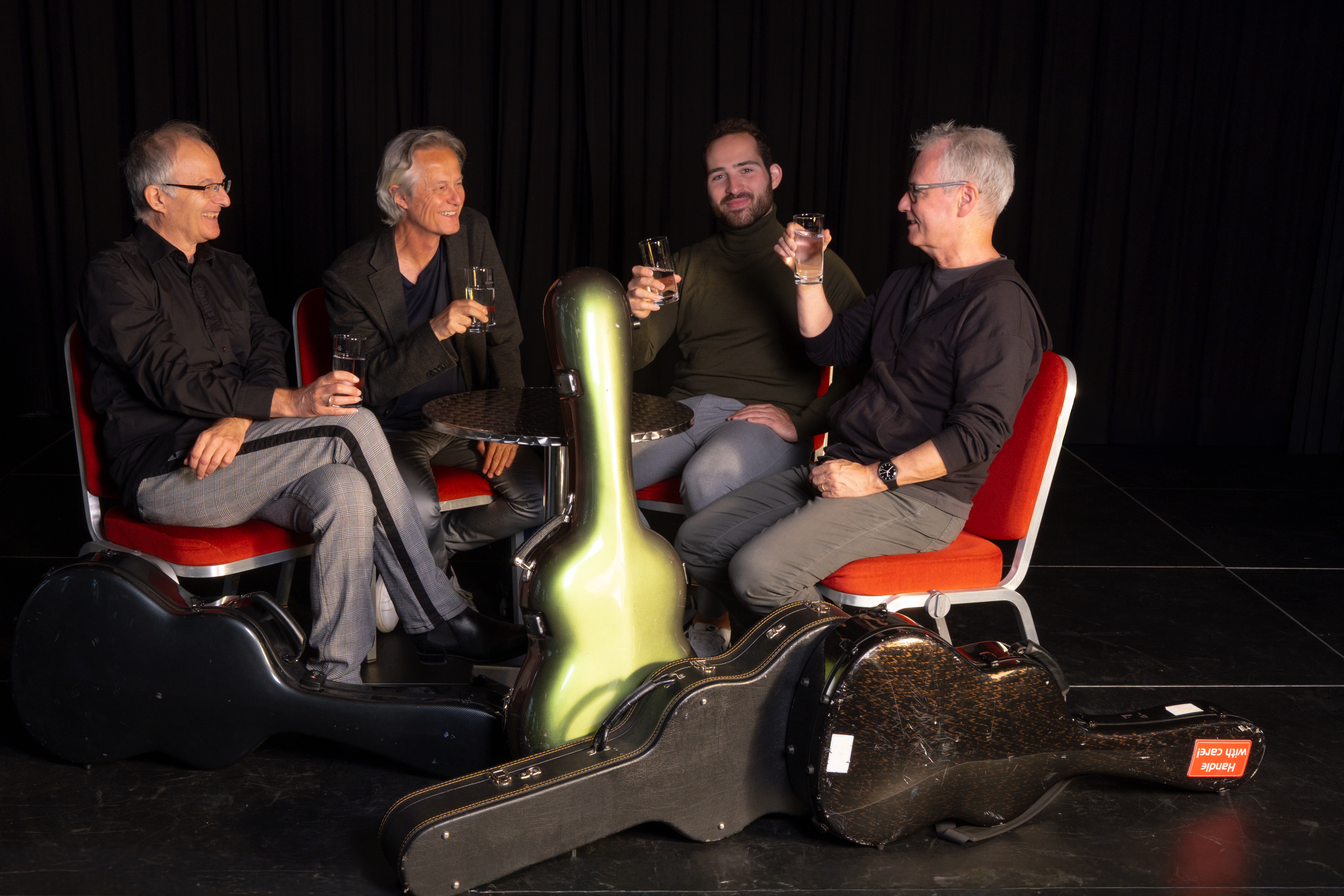
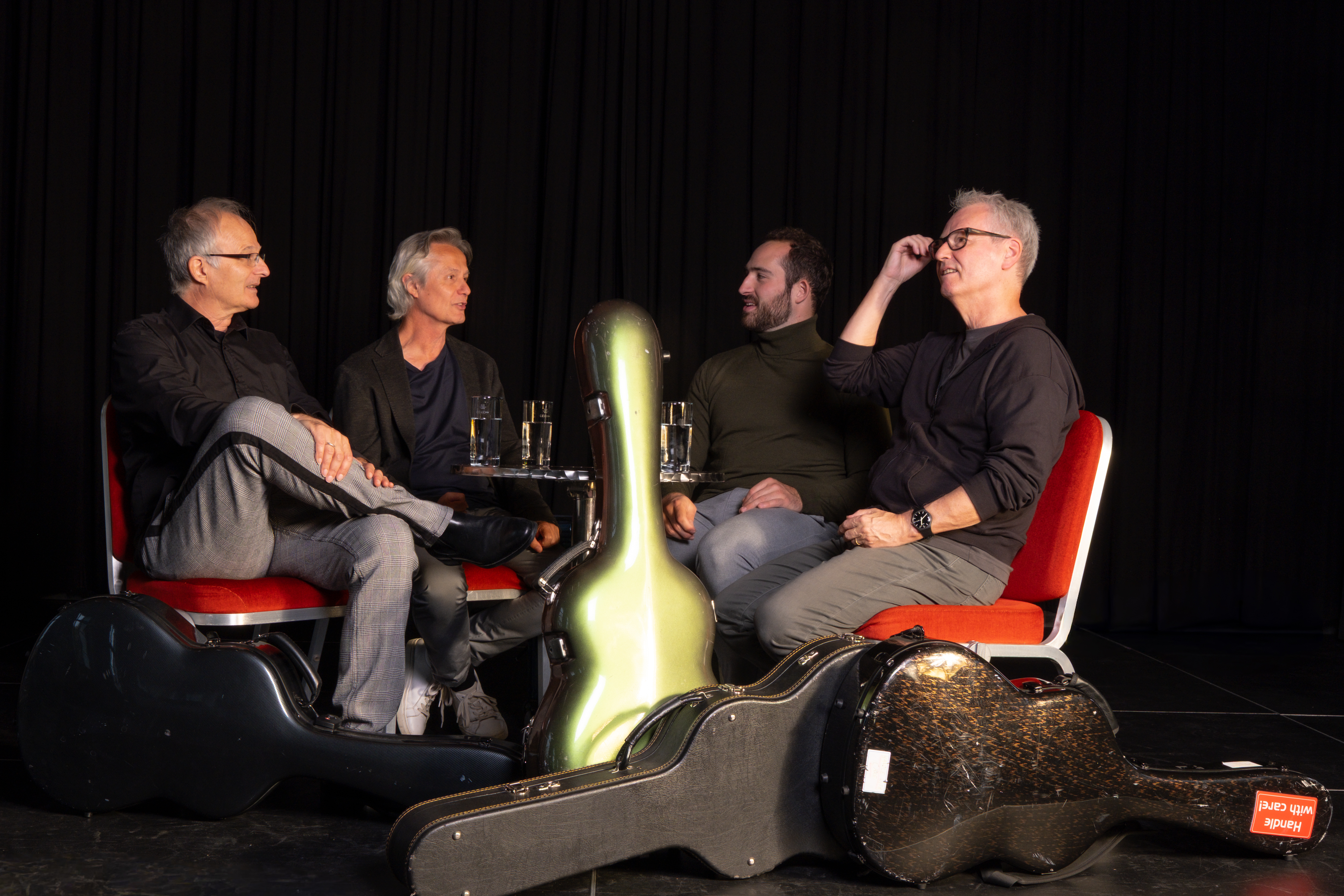
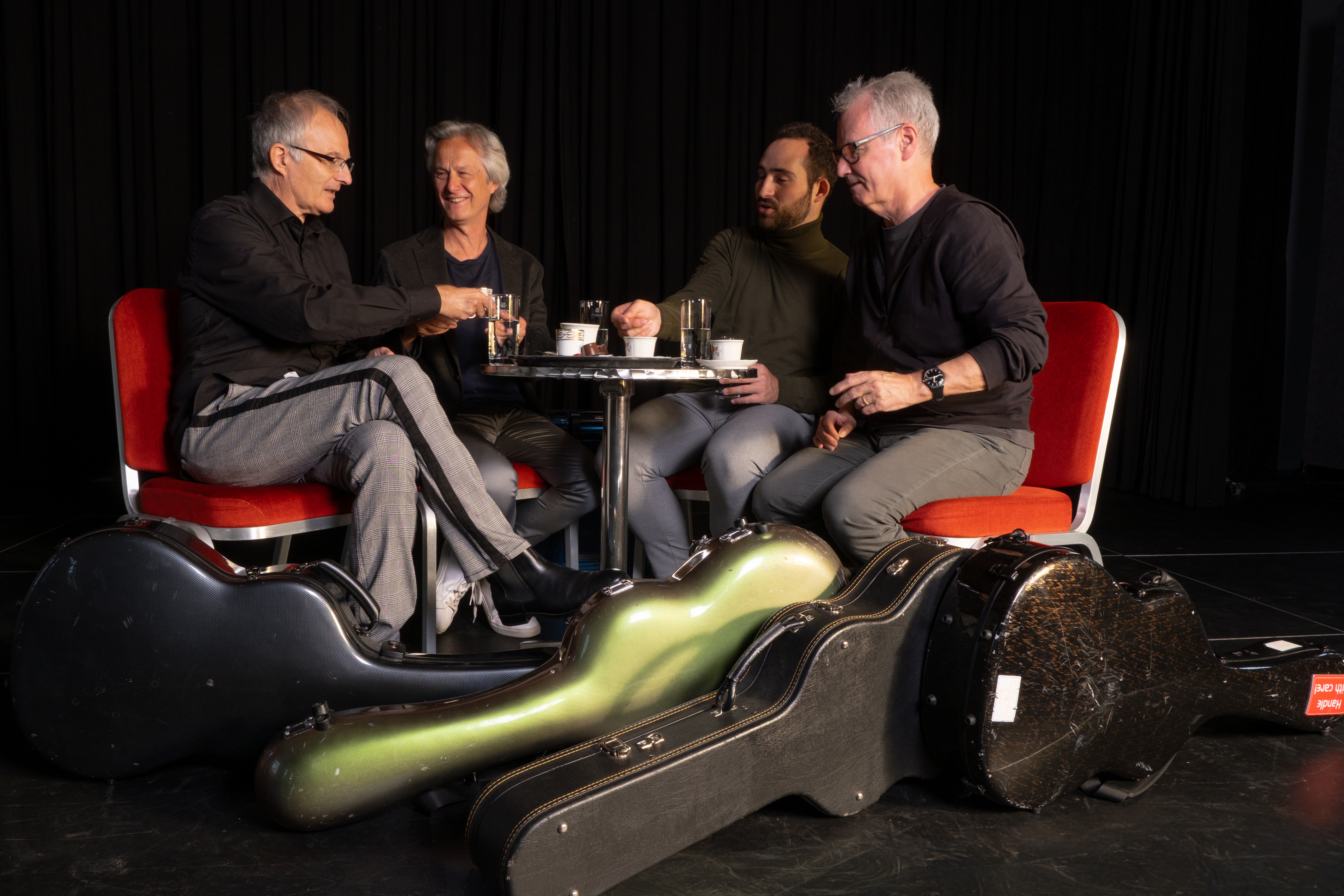
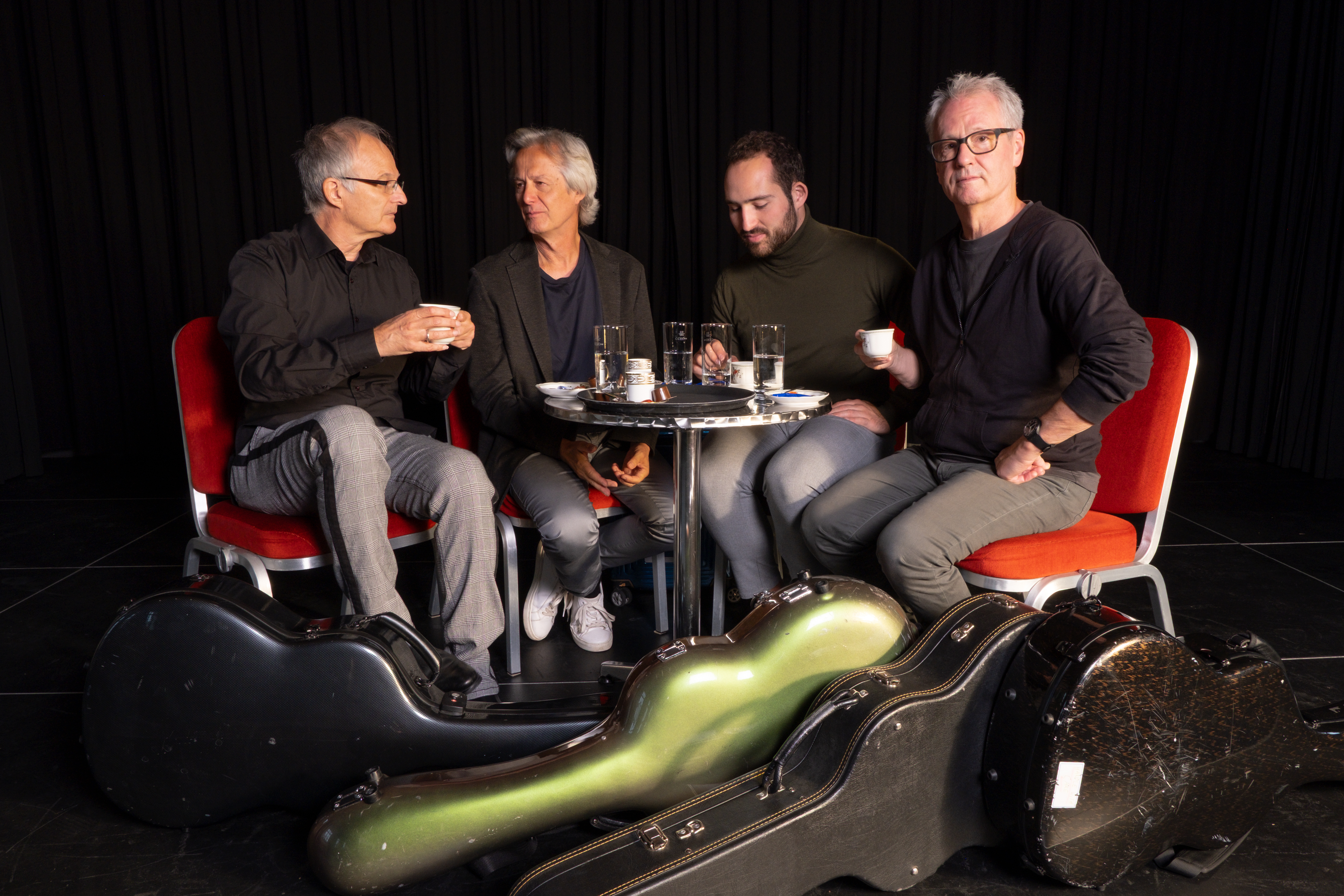
There are not many guitar quartets, world-class ensembles can be counted on half a hand. Undoubtedly, the Zurich-based Eos Guitar Quartet, which takes its name from the Greek goddess of dawn, is one of the top representatives of this formation. The quartet's first album appeared 30 years ago, in 1991, with the lineup of Marcel Ege, Martin Pirktl, David Sautter and Michael Winkler. In 2013, founding member Martin Pirktl left, and since then Argentine Julio Azcano has been playing in the Eos Guitar Quartet, which, while maintaining a consistently high level of interpretation, not only delights classical music purists with its extraordinary repertoire. The fortunate shamrock has always proven to have open ears for world music, with numerous releases such as the album '20 +', featuring compositions by Ralph Towner, John McLaughlin, Egberto Gismonti and Paco de Lucia in exceptional arrangements and interpretations. The Swiss' current project is called "El alma de Paco" (Paco's Soul), has been released in time for the quartet's 30th anniversary and is a tribute to Paco de Lucia, whom the musicians greatly admire. A very happy Michael Winkler reveals in an interview everything worth knowing about this project.
How nice Michael, that you found the time for a conversation. Let's get straight to the point. What is the Paco project about?
Paco was the best. We agreed on that. We knew him well and visited him often when he was in Zurich. When he died, it was a shock for us. The music world without him? Unimaginable. So we decided to pay our respects and conceive this album. As the title suggests, which translates as "Paco's soul", the project was not going to contain pieces by Paco, but works by other composers that honor him, the maestro. So we asked several composers to write a piece for us and this project. We combined these new works with original compositions by Marcel and David, as well as arrangements by Manuel de Falla. Paco greatly admired their music and interpreted it in his own way, so de Falla's arrangements complete the program perfectly.
Who wrote for this project?
Flamenco guitarist and composer José Antonio Rodríguez wrote a long three-movement piece for us that is the closest to flamenco and is appropriately titled "El alma de Paco". Then we were again lucky enough to have Leo Brouwer - a self-confessed Paco fan - write a three-movement composition for us as well. Leo refers to Paco's album "Live in America" and uses motifs from the rondeña 'Mi Niño Curro'. However, it is a genuine Brouwer piece that speaks of his sound language with echoes of Paco's music and flamenco techniques.
Is it difficult to play Brouwer's piece? How long does it usually take you to rehearse new pieces?
Yes, it is very difficult and we always take a lot of time. There is nothing worse than putting fresh music on stage or recording it as soon as possible. We always do it calmly, we work those pieces very carefully, we take our time until we are completely with the music and it's inside us. In the case of Leo's composition, it was about a year and a half in the studio until we released it in 2019.
The third famous musician in this round table of composers is John McLaughlin, how did you get him, a world star after all, to write something for you?
John had already given us a piece, 'Lighthouse', for our 20th anniversary. We've been in touch ever since. In fact, John always gets back to me immediately when I write him an email. He is a very kind soul. When I told him about this project, he jumped on board quickly. Because he had a piece, it's called 'Dreaming of Sound,' that he had composed for Paco and for him. He wrote: "Then I lost Paco and I kept it, because who was going to play it?". He agreed to give us 'Soñando con el sonido' -for free, by the way- and sent us the score. Julio then made an arrangement for our instrumentation. John's piece closes the album. By the way, he has listened to it in the meantime and he is full of praise.
Admirable. You also have guests on the album: the magnificent flamenco singer Carmen Linares can be heard on two pieces. There is also the excellent percussionist Ricardo Espinosa, who is also a major player on the flamenco scene. Have you been working with both of them for a long time?
With Carmen since 1999 and we have also known Ricardo for a long time. They are both wonderful musicians who enrich this album congenially with their colors, so that the project also breathes with the soul of flamenco. However, we could not record together due to the pandemic. Carmen and Ricardo sang and recorded their parts in a studio in Madrid. But it worked very well and we all liked the premaster.
Let's move on to production: Where did you record?
We were very lucky to be able to record in the big hall of the SFR (Swiss Radio and Television). We were allowed four days, including the sound engineer: fantastic. This hall was built in the 1950s and has overwhelming acoustics. Even the softest sound can be heard clearly, creating sound in such an environment is a pure pleasure. However, we couldn't record the whole album at the SFR. The rest we recorded at Hardstudios with Moritz Wetter. He is an exceptional sound engineer in whom we can trust blindly. He knows the SFR room very well and was able to recreate the sound perfectly. But recording in the dry recording room, with the distance and the mask, took some getting used to.
Did you also use the flamenco guitars?
Yes, we did. On the Brouwer, for example, we mixed the flamenco sound with our classical guitars. In Rodriguez we only played the flamenco guitars, just like in Marcel and David's pieces. We made the decision spontaneously.
Basically, you prefer traditionally built guitars?
Exactly - no double tops, because sonority and the guitar, which is a silent instrument, don't go together. We also cultivate the Spanish technique and do a lot of Apoyando. The modern pulling style is honorable and certainly optimal for solo polyphonic works. But to emphasize a melodic part in a quartet, the Apoyando is the most appropriate. Besides, this is the Spanish sound. The Spanish soul, so to speak.
Which closes the circle nicely. Thank you very much for this pleasant conversation.
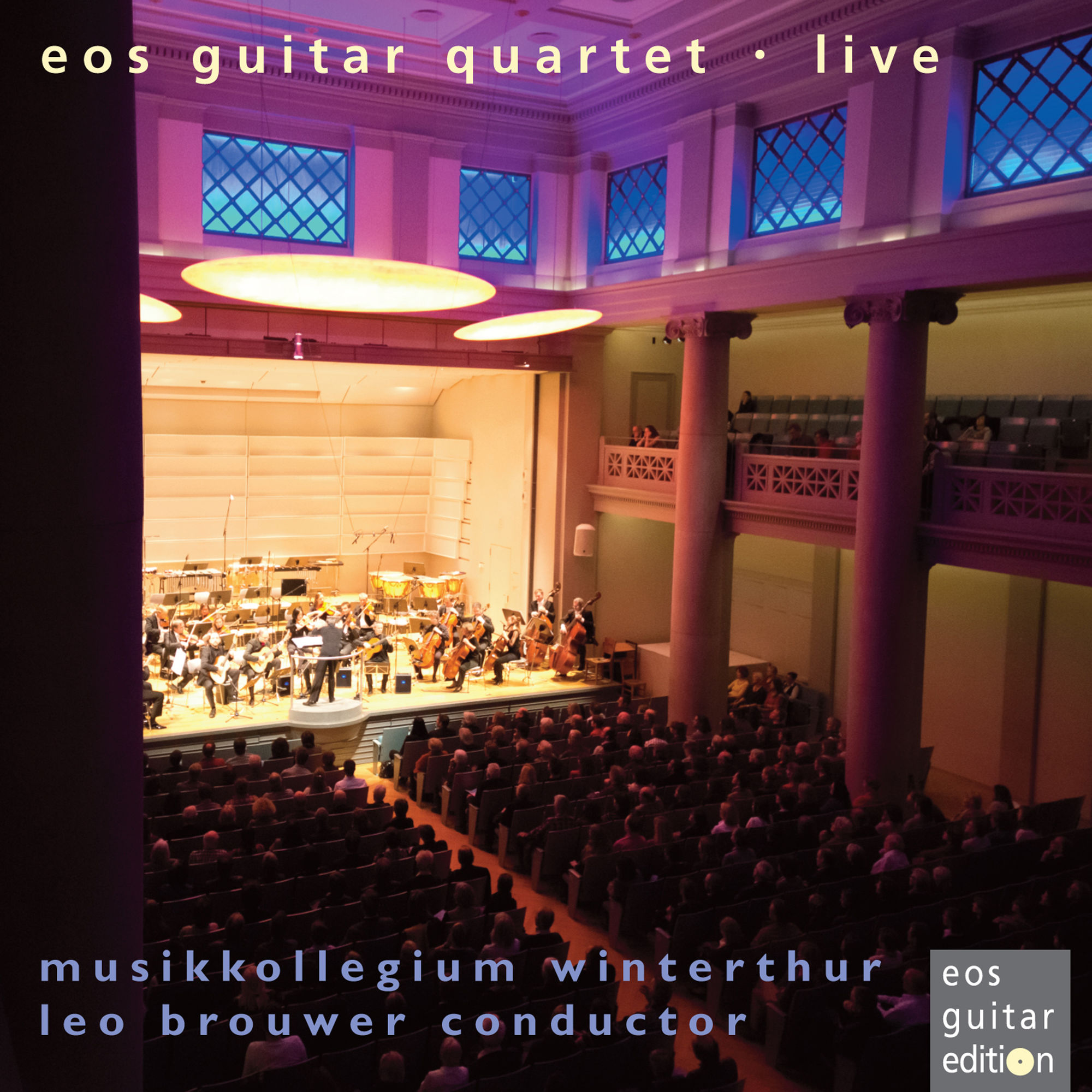
Eos Guitar Quartet: Live
EOS Guitar Quartet, Musikkollegium Winterthur (Leo Brouwer, conductor) Eos Guitar Edition
Swiss quartet, orchestra shine on Gismonti and Towner
Guitars and orchestras do mix, and here to reinforce that statement is a brilliant example of strings, bowed and plucked, emanating from the heart of Switzerland by that country’s “oldest” orchestra (formed 1875) and the relatively newer (but celebrating 25 years of performing) Eos Guitar Quartet, whose members are Julio Azcano (replacing original member Martin Pirktl in 2013), Marcel Ege, David Sautter, and Michael Winkler.
It is a sumptuous menu. With Leo Brouwer as guest conductor, we have the stunning Gismontiana, Brouwer’s arrangements of six of Egberto Gismonti’s most distinctive pieces: Frevo, Água e Vinho, Baião Malandro, A Fala da Paixão, Cadenza, and Loro. The eight hands of the quartet swirl among the maelstrom of the orchestra—often manic, then playful and suddenly plaintively lyrical; Gismonti’s distinctive music, defying easy categorization, is consistently joyous.
A world premiere delights—a piece dedicated to the Eos Guitar Quartet titled Confluence, by Ralph Towner, a record-label mate of Gismonti’s, who helped to shape the distinctive sound of Manfred Eicher’s ECM records from the company’s earliest days. The three movements—“Waltz,” “Slow,” and “Allegro”—make for a substantial work at just under 20 minutes. Towner’s idiomatic sound world is explored here in dark hues of musical mystery. Always accessible but not “easy,” Towner never fails to take the ear and mind on a captivating journey.
Recommended! —TP
Reviewing the best in non-mainstream acoustic guitar music
Eos Guitar Quartet - Live
(Eos Guitar Edition)
A fine classical guitar quartet playing the music of two of the most brilliant composers for classical guitar in the modern era – sounds like the recipe for a breathtaking musical experience. "Eos Guitar Quartet Live" is just that – filled with crisp, lyrical playing, seamless parts, and inventive compositions. The quartet is: Julio Azcano, Marcel Ege, David Sautter, and Micheal Winkler, based in Switzerland. The disc contains just two pieces: Leo Brouwer's "Gismontiana," which is Brouwer's exploration of themes from the music of the famous Brazilian composer Egberto Gismonti, and "Confluence," by Ralph Towner. But don't be fooled – the recording is 55 minutes of complex yet inspiring music. The piece by Brouwer was recorded live with the Musikkollegium Winterthur, conducted by the composer himself. The opening movement of "Gismontiana," is Brouwer at his most skilled – dense chords that drive the tune, while the orchestra complements and introduces the underlying melody. The third movement entitled "A Fala de Paixao" leads with a single guitar playing a gentle melody line, then joined by the other guitarists and the orchestra, a magical, flowing movement that enchants the listener, shifting subtly to other themes, then returning to the main melodic idea. The next movement, "Cadenza," is just that in the spirit of classical music – a section where the guitarists explore all kinds of ideas, revealing the command of their instruments. The American guitarist/composer Ralph Towner has been a prodigious creator of intricate, sometimes dense, and usually challenging music. His "Confluence" – a world premiere commissioned performance on this record – is just three movements: "Waltz," "Slow," and "Allegro." "Waltz" is a brilliant exploration of that form, though I would find it difficult to keep in step during some sections that move freely in and out of that rhythm. "Slow" takes the listener on a semi-minimalist journey, repeating key phrases that drive the movement in a hypnotic stillness. The CD and this composition end in "Allegro," marked by rapid sections of arpeggios that whirl and tumble. It is an ecstatic conclusion to an excellent tribute to two giants in the world of guitar composition, played by four men who are masters of their instruments.
© Kirk Albrecht
Minor 7th
Eos is the rosy-fingered goddess of dawn. Forget all about early morning sleepiness: when the
four gentlemen of the Eos Guitar Quartet start stroking the strings, the sun comes up and the
temperature rises. Far away from any Aranjuez-style schmaltz lies the exciting no man's land
between jazz, tango and the so-called serious music - this is where the Eos guitarists feel at
home.
...If you think you could do with a musical surge of adrenaline, do not miss this concert."
The arrangements, whether by the quartet as a whole or by individual members, were ideally suited to the instrument but still paid due respect to the original. All interpretations were technically brilliant, each one en-chantingly alive in its own way, and fully exploited the possibilities of the guitar in highly sophisticated manner.
Masterly, out-of-the-ordinary, sparkling.
…superb virtuosity…
On this CD the EOS Guitar Quartet is sovereign master of every situation. Highly
recommended.
Such is the art of Marcel Ege, Martin Pirktl, David Sautter and Michael Winkler, that even Rossini’s Barber of Seville overture sounds absolutely authentic.
FONO FORUM (D)
With creative flair, extreme sensitivity and rich humour.
HIFI VISION (D)
It is nothing short of an outrage how these four young Swiss guitarists simply take over
classical music for their quartet.
Outrage? Not if we like it. And with such sophisticated guitar fireworks and superb
musicianship seldom seen in this sector, how could it be otherwise?
TAGES-ANZEIGER (CH)
Zurich composer and saxophonist Daniel Schnyder’s guitar quartet
of 1990 was performed with brilliant virtuosity. The technical capabilities of Marcel Ege, Martin
Pirktl, David Sautter and Michael Winkler were ideally highlighted by syncopated jazz-style
passages richly interspersed with attractive harmonies and rhythms.